

A climate change mitigation project does not materialise in a vacuum, but in places where people live and businesses operate. atmosfair is planning two biogas plants in the Philippines and has therefore invited everyone who will be affected to attend information sessions. At these Local Stakeholder Consultations (LSCs) in March and April, the climate action organisation gained an understanding of their interests and concerns.
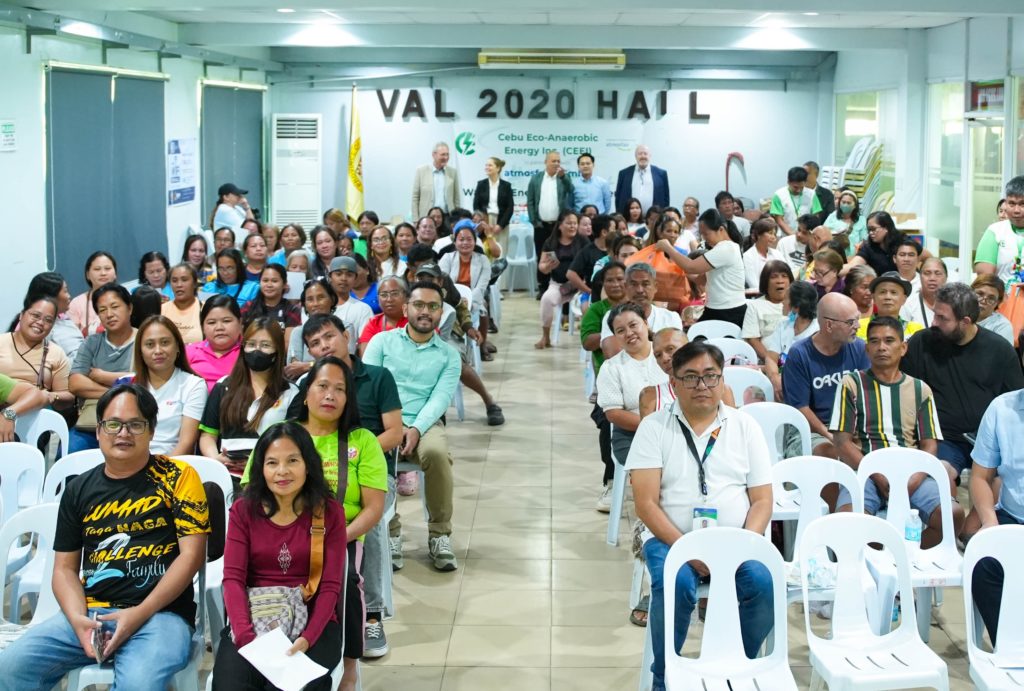
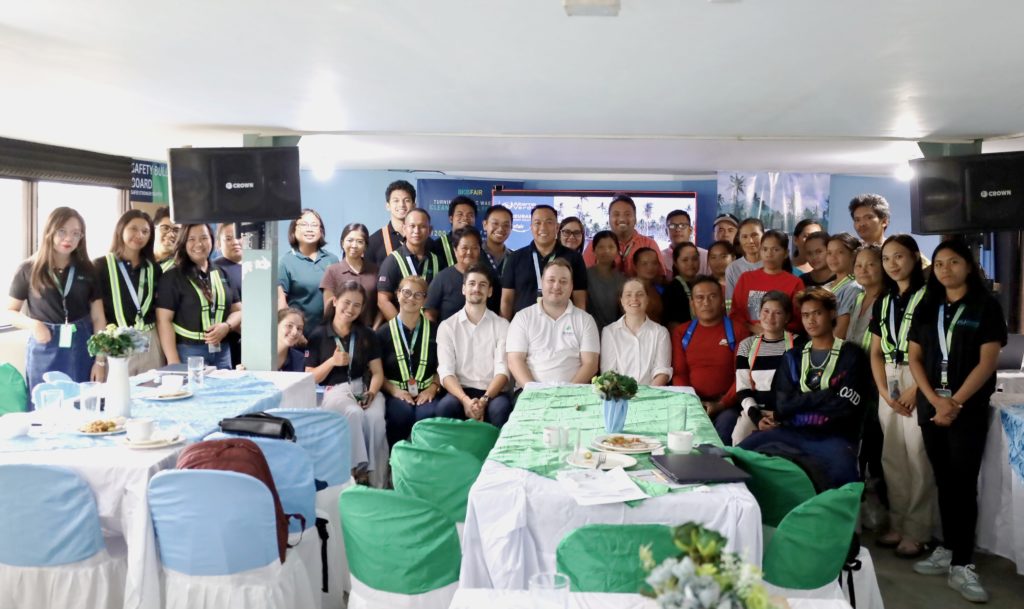
On 7 April, 40 people gathered at the offices of Alterna Verde Corporation in San Pablo, a town near Manila. The group was diverse: local residents, representatives of the local recycling cooperative and an environmental group, the local government, and the Department of Environment and Natural Resources. The focus of the meeting was an innovative biogas plant that fits inside a shipping container. The pilot plant, developed by REURASIA Management Corp., is set to be built at a waste treatment facility in San Pablo, with funding from atmosfair. In an introductory presentation, atmosfair project manager Julia Beerhues, together with REURASIA and its partner company Alterna Verde, outlined what the people in the region can specifically expect. During the subsequent discussion, all participants had the opportunity to ask questions and raise concerns – anonymously on slips of paper, if they wished.
A say for all stakeholders
“In the Philippines, I saw that the local community took a keen interest in the projects: people asked lots of questions and provided plenty of feedback. Of course, we already plan our projects to have the most positive impact possible on the community and the immediate environment. But if something has been overlooked, we can still make changes before the project starts,” says Beerhues, explaining the purpose of the LSC. The event did not give rise to any major changes in the design of the plant. Nevertheless, representatives of the recycling cooperative expressed concern that they might lose work following the biogas plant implementation. REURASIA responded by explaining that it will only process a small proportion of the waste collected (3 tons per day out of the 500 tons per day received by the waste facility). Furthermore, the segregation of plastic and other non-organic materials is expected to create additional work opportunities.
Two weeks earlier, on 20 March, atmosfair organised an LSC on the island of Cebu. There, it briefed local stakeholders on the construction of a biogas plant to be connected to an existing waste treatment facility. FDR Integrated Resource Recovery Management Inc. processes the waste, whilst its subsidiary, Cebu Eco-anaerobic Energy Inc. (CEEI), will build the new biogas plant. Over 100 people gathered at City of Naga Town Hall and welcomed the prospect of generating large quantities of renewable energy and organic fertiliser in their home town. However, they also expressed fears that the expansion of the plant would result in too much waste being transported to the site. These concerns were also allayed: thanks to expanded capacity, the entire plant will process the additional waste into electricity and organic fertiliser.
Climate protection through waste recycling
The Gold Standard carbon registry, which certifies atmosfair’s CO₂ mitigation, makes such LSCs mandatory. They are designed to prevent climate change mitigation projects from having a negative impact on the local population and environment. In addition to precise rules on which groups of people must be invited to participate, the Gold Standard provides a grievance mechanism. Representatives of all stakeholder groups can use this mechanism throughout the entire duration of a project.
Thanks to funding from atmosfair, CEEI’s biogas plant will process 200 tonnes of organic waste per day generated at FDR’s waste treatment plant. The biogas can be used to generate 4.5 megawatts of electricity, which meets the needs of around 13,000 households. The remaining digestate from the plant produces organic fertiliser. REURASIA’s small containerised plants can process three tonnes of organic waste per day into biogas, electricity and fertiliser. A total of 15 such plants are planned, provided the pilot project in San Pablo proves successful.
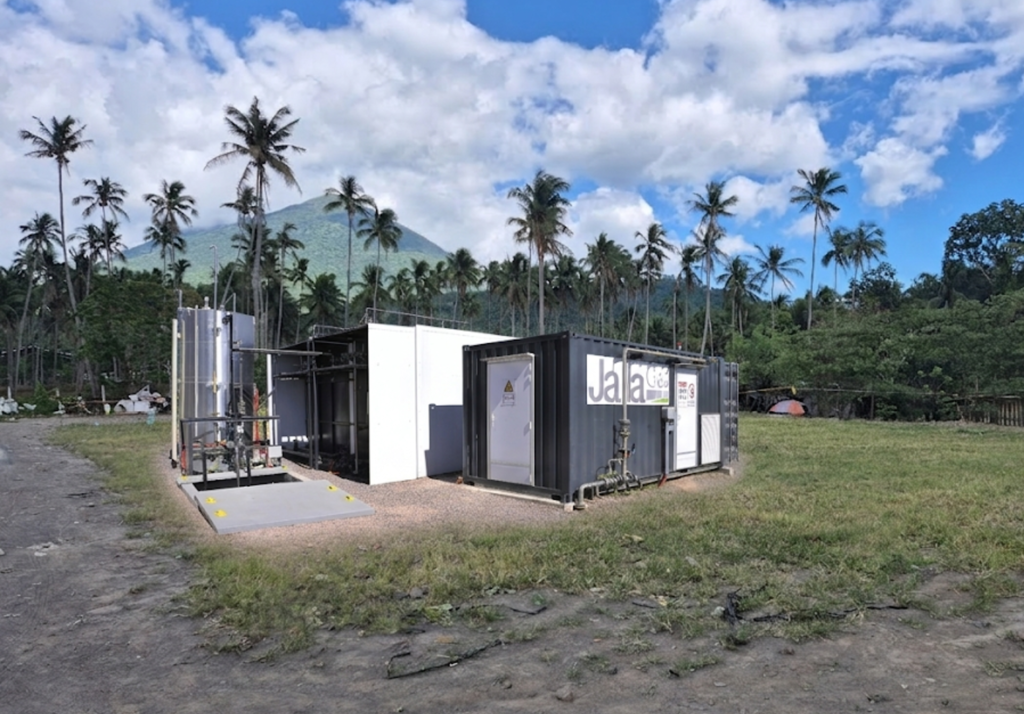
Both facilities make an important contribution to climate protection, showcasing small and large scale solutions that matches the Philippines archipelago context. In the Philippines, organic waste is disposed both in official landfills and illegally. When the waste rots there uncontrolled in the absence of air, methane is produced, which escapes into the atmosphere unused. This greenhouse gas is 27 times more potent than CO2. During controlled digestion in biogas plants, the methane is captured and subsequently used to generate energy, so that it does not further warm the atmosphere.
The minutes of the LSC in San Pablo can be found here in English. The minutes of the LSC in Naga will be published on the website soon.
 Share
Share