

atmosfair and Sustainology are launching a new type of biogas plant in Akuse that will supply up to 40 households with climate-friendly cooking gas – using organic waste from food processing, cattle manure and the invasive water hyacinth.
Together with our local partner Sustainology, we are breaking new ground in the use of biogas with an innovative container system. The pilot plant in the Ghanaian community of Akuse can be set up quickly thanks to its prefabricated design, as no complex concrete structures are required, unlike traditional biogas plants. It processes 1.4 tonnes of organic waste daily into 60 cubic metres of biogas, which is then transported directly to households in balloon-like containers. This means the system does not require a complex pipeline infrastructure.
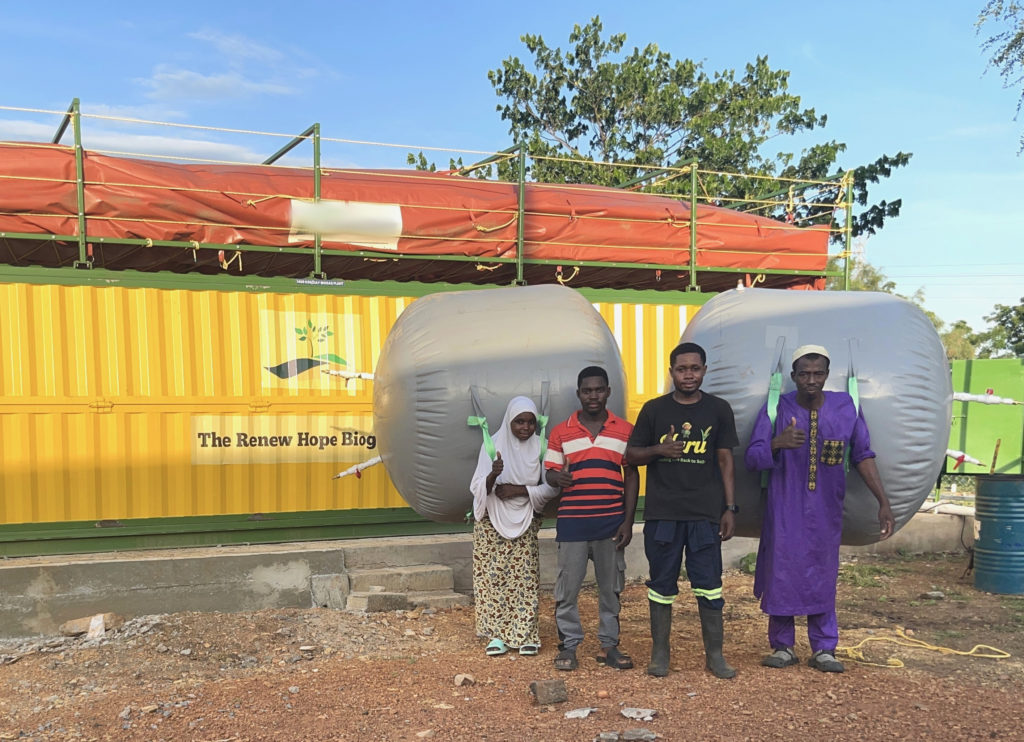
atmosfair project manager Fabian Lauffer has seen for himself how the new technology and construction progress are developing in Akuse: “It is impressive to see how the plant is growing step by step, just as the dedication of the Sustainology team driving new ideas forward.” In total, the plant will save around 190 tonnes of CO₂ per year, in particular by replacing traditional fuels and avoiding methane emissions from openly decomposing waste.
Five people are responsible for operating the plant. In addition to technical maintenance, they collect the feedstock and transport the biogas to households in special gas containers. During the trial phase, operational processes are currently being further optimized.
Circular economy opening up new prospects
Samiksha Satpute, co-founder of Sustainology, highlights the wide-ranging benefits for the people of Akuse: “Working with atmosfair, we have been able to build a farmer-first circular economy ecosystem that operates as a micro-enterprise creating employment and clean energy while reducing the dependence on chemical fertilizers.”
This dependency is not only an economic issue, but also an environmental one: the production and use of synthetic fertilisers release greenhouse gases that are harmful to the climate. The digestate left over from the biogas plant provides a nutrient-rich alternative. Sustainology will further enrich this residue with biochar and selected microorganisms that improve soil fertility and enhance nutrient availability.
If the pilot plant proves successful and the services are adopted by local communities, atmosfair plans to scale up the project. Initially, ten additional plants are planned for the region, with further sites to follow across Ghana. The resulting emission reductions will be verified by external auditors and certified. Thanks to Corresponding Adjustments, these credits can be used for CO₂ offsetting, contributing to additional climate protection.
Utilising genuine waste and harmful plants
The village of Akuse offers ideal conditions for the pilot project: it is easily accessible from the capital, Accra, and provides large quantities of various types of biomass residues. Numerous small-scale farms produce large quantities of cattle manure, while nearby fruit-processing facilities dispose of pineapple and mango peelings in ways that lead to greenhouse gas emissions as they devompose. When such organic waste breaks down, it releases climate-relevant gases, particularly methane.
Another form of waste biomass suitable for use in the biogas plant is water hyacinth. It poses a major problem in Ghana because it reproduces so rapidly in freshwater that it has overgrown large sections of the Volta River and other waterways. In doing so, it deprives other plants and fish of light and consumes oxygen as its dead remains rot in the water. Its use in the biogas plant helps reduce this environmental pressure.
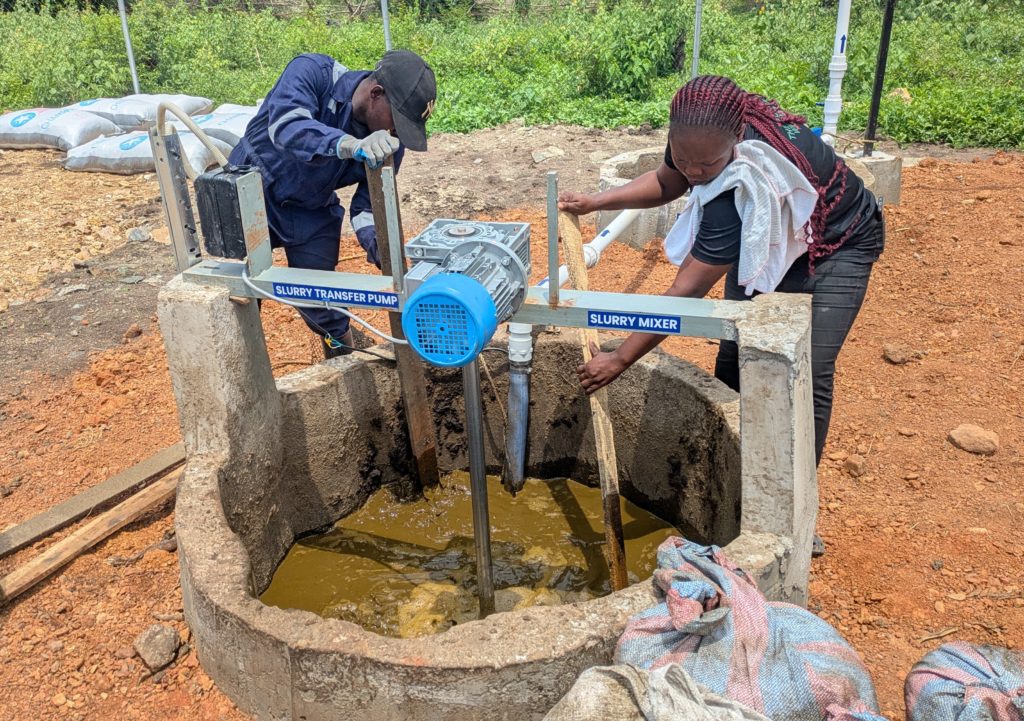
In the biogas plant, microorganisms break down the organic residues in an oxygen-free environment. This produces methane, an energy-rich gas that is captured by the plant. What makes the Akuse plant special is its modular design: it essentially consists of a container and a large gas storage unit and can be easily transported and quickly installed. Unlike conventional biogas plants, there is no need for concrete structures such as fixed domes.
 Share
Share