

atmosfair is breaking new ground: In Malawi, we produce bricks in energy-saving shaft kilns for growing construction needs.
“Deforestation here is our biggest environmental problem,” says Charles Nasala, Managing Director of our project partner New Vision Anenenji Building Construction. One percent of Malawian forest disappears annually – and the trend is rising. According to Welthungerhilfe, at this rate all forest in Malawi would be cleared in 40 years. A large portion of the wood ends up in brick production: Malawi’s population is growing and needs a roof over their heads.
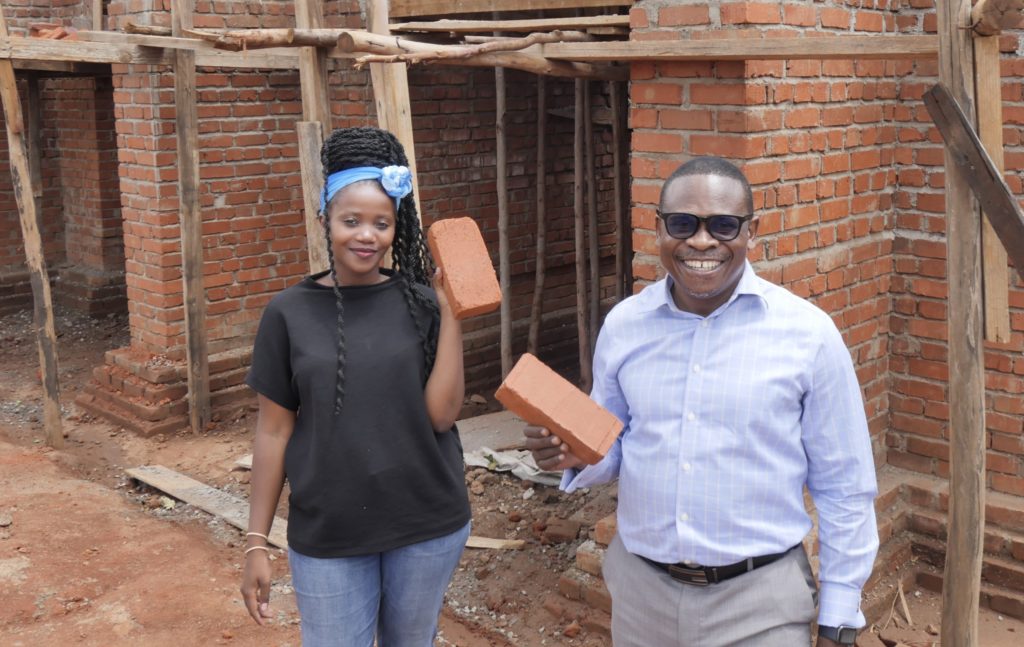
“A typical Malawian family builds their home with bricks, and currently brick production occurs largely in the informal sector,” Charles Nasala describes the situation. The informal sector includes people and micro-enterprises that are not captured in a country’s official statistics (shadow economy).
Bricks must first be formed and then fired. Malawian brick producers typically stack formed bricks outdoors. In the cavities underneath, they light a fire with firewood and charcoal and fire the bricks this way. Brick producers need large quantities of firewood because a lot of waste heat is lost during the process. They often clear nearby forests, which recover slowly or not at all.
The end product is also an unevenly fired brick because temperature distribution is difficult to control. “We cannot and do not want to stop people’s desire for a – mind you, very simple – house. For many Malawians, these bricks are the only available Building material,” Charles Nasala sums up the current situation. He and others are urgently seeking alternatives. For instance, the Malawian government passed a law in 2018 prohibiting the construction of public and commercial buildings with bricks from traditional brick-firing methods.
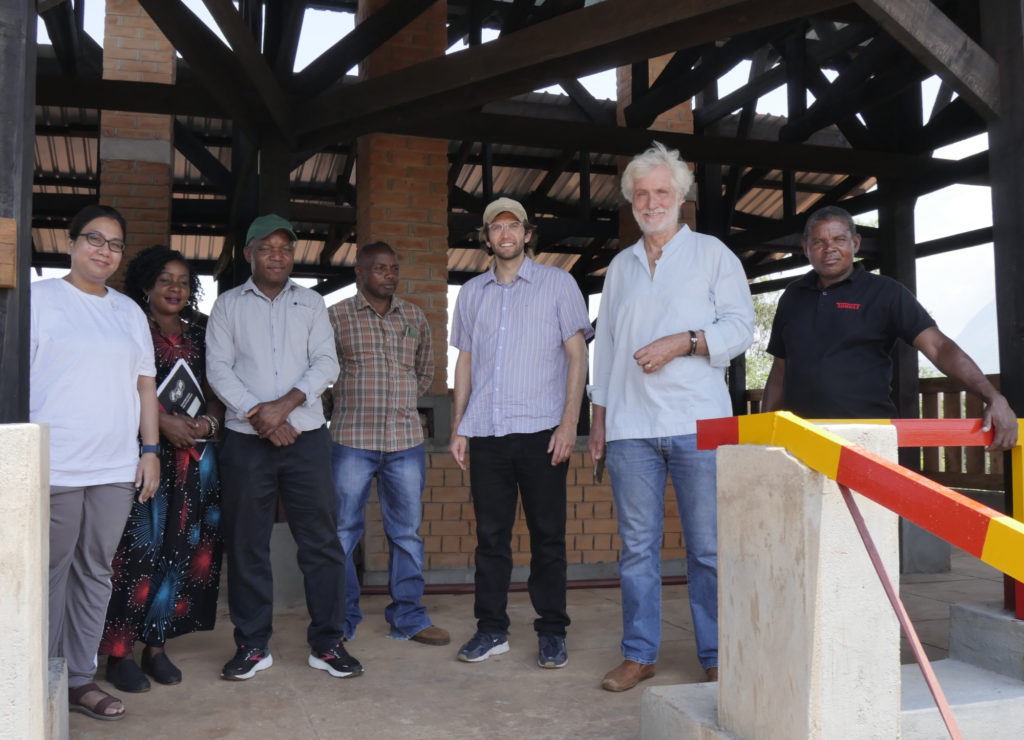
atmosfair Enters New Territory in the Construction Sector
It was a long road to the first bricks from alternative production. Together with MIERA, a project of the Deutsche Gesellschaft für Internationale Zusammenarbeit (GIZ), atmosfair analyzed the Malawian construction sector in 2023. After intensive preparation, atmosfair was able to sign the first contract with Charles Nasala and NEVAGAS B.C. at the end of 2023 and thus finance the construction of a first facility for climate-friendly brick production.
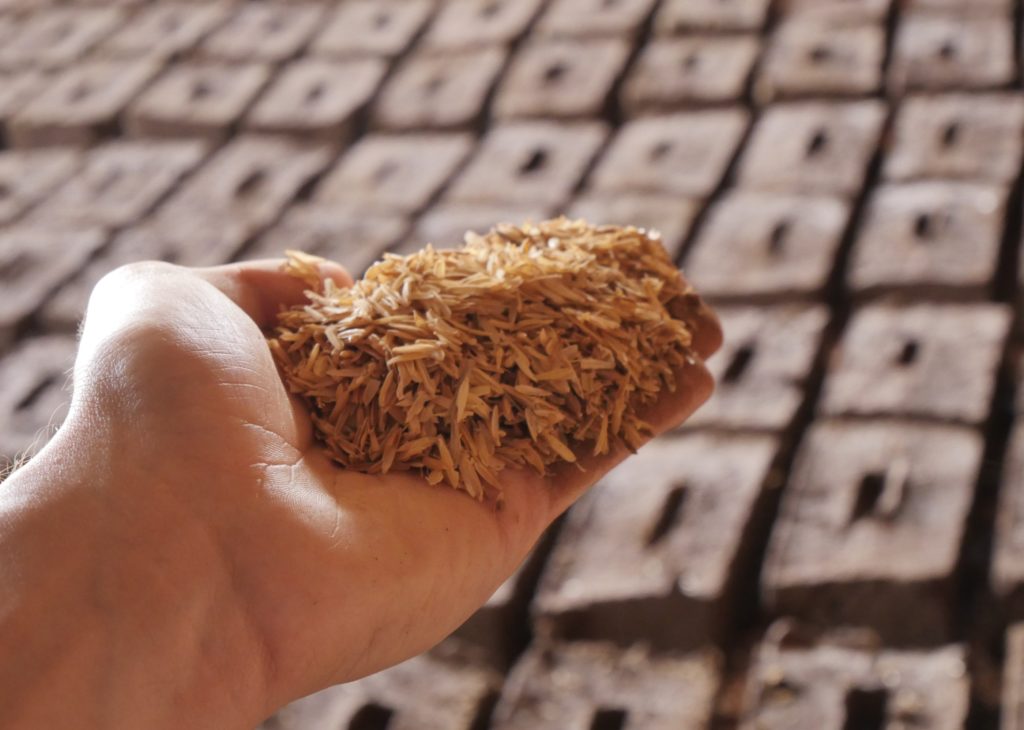
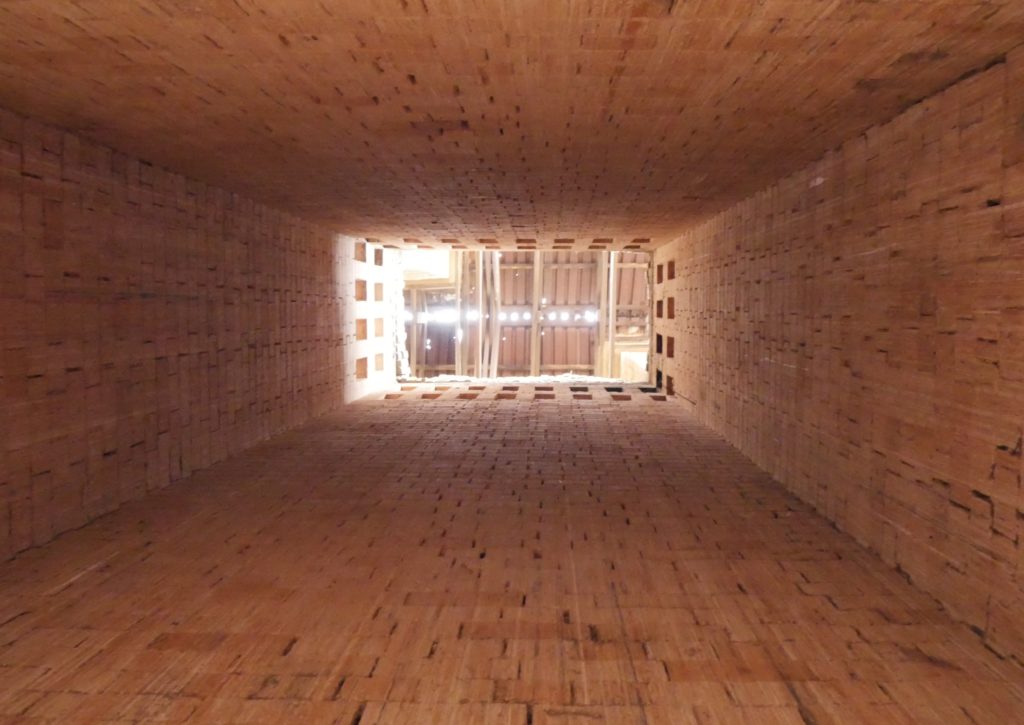
The vertical shaft kilns (Vertical Shaft Brick Kiln [VSBK]) run completely on renewable raw materials and consume less than half as much energy as conventional production facilities. As fuel, NEVAGAS B.C. uses not firewood but waste materials like rice husks. These biomass wastes from rice or tea production would otherwise simply rot or be burned by farmers. In the shaft kiln, their energy can be used sensibly. This only produces CO₂ emissions that are CO₂-neutral because the plants drew their carbon from the atmosphere while growing. By forgoing firewood and the efficient functioning of the VSBK, brick Producers save around 1,000 metric tons of CO₂ each year.
The First Kiln is Complete
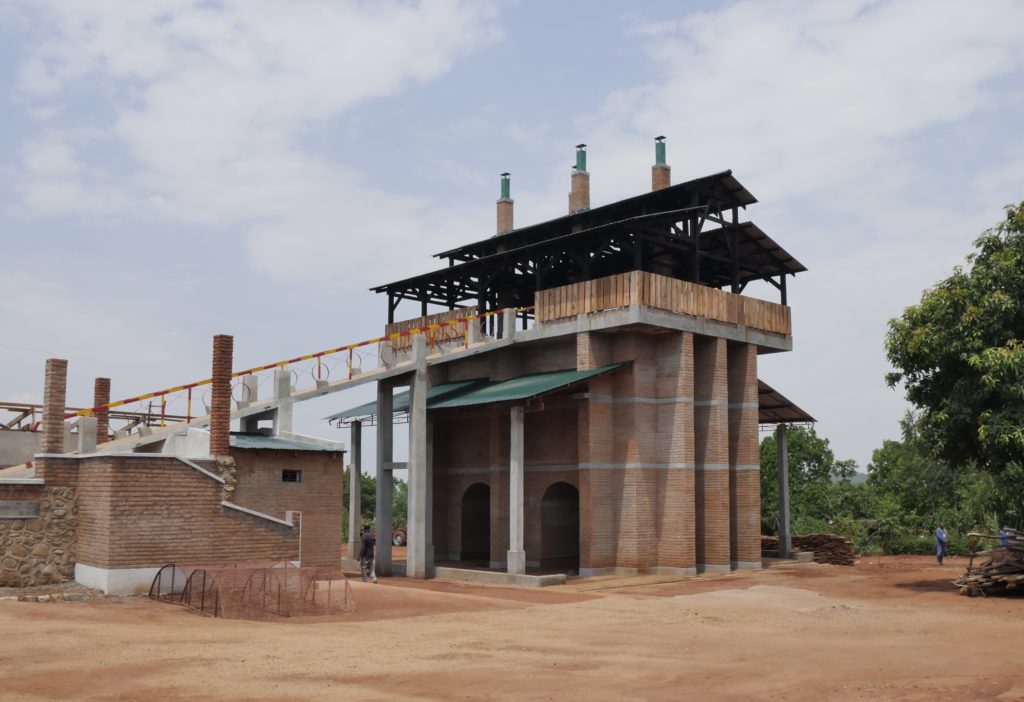
In December 2024, the time had come: construction work on the first shaft kiln was completed. Charles Nasala and his employees are pleased that his company will soon be able to start production: “With this kiln, we can produce over three million bricks per year. With that, 120 houses can be built – and we urgently need them here.” Malawi’s population has grown by about four million in the last 10 years.
High-Quality Brick Production
The high production capacity is part of the VSBK principle. In contrast to traditional methods, the bricks in the VSBK are fired in a continuous firing process. Unfired brick blanks are introduced into the shaft from the top together with the climate-friendly fuel and are continuously lowered to the end of the shaft within 24 hours. In the middle of the shaft is the so-called heating zone. In this zone, the agricultural residues burn off, causing the bricks to harden.
The excess heat rises upward and continuously heats the upper bricks. This saves a lot of energy. The uniform firing process ensures a particularly load-bearing, strong brick.
“The VSBK is the best and most economical kiln.”
The construction of the kiln has also attracted the interest of Dr. Isidore Yama from the capital Lilongwe: “When I heard about VSBK technology, it was immediately clear that I wanted to get in touch with atmosfair.” Dr. Yama is himself a brick producer and has spent recent years intensively examining alternatives to traditional brick-firing methods. He had even built his own brick kiln for this purpose. But even his innovative capacity eventually reached its limits: “My kiln has its limits. We couldn’t make it bigger, and producing 3,000 bricks per week isn’t really a business. That’s why we couldn’t achieve much in all these years.” After thorough research, Dr. Yama came to the conclusion: “The VSBK is the best and most economical kiln.”
Like many small entrepreneurs, Dr. Yama has not been able to expand his business model so far. Malawi is currently experiencing a severe economic crisis. Bank loans are often so expensive that companies cannot possibly service them. This makes atmosfair’s work all the more important. In April, atmosfair was able to contractually conclude cooperation with Dr. Yama and his company Fayam Limited and begin construction of the kiln. The kiln should be completed by mid-2025. Dr. Yama is already preparing intensively for the operational phase: He is already in contact with producers in the wood industry and wants to use waste sawdust and rice husks as sustainable fuel.
Further Expansion Planned in Malawi
Success is attracting attention. atmosfair has established contact with additional Malawian entrepreneurs who have already carried out first steps such as soil investigations. With five of these entrepreneurs, atmosfair has created a clear roadmap to further exploit the great potential of the VSBK. The high demand for bricks will continue to grow in the future. To prevent this from ending catastrophically for Malawian forests, investments in climatefriendly technologies are needed today – like those from atmosfair.
 Share
Share