

Like many East African countries, Tanzania has a waste problem. To prevent this from becoming a climate problem, we compost organic waste there and produce climate-friendly fertilizer.
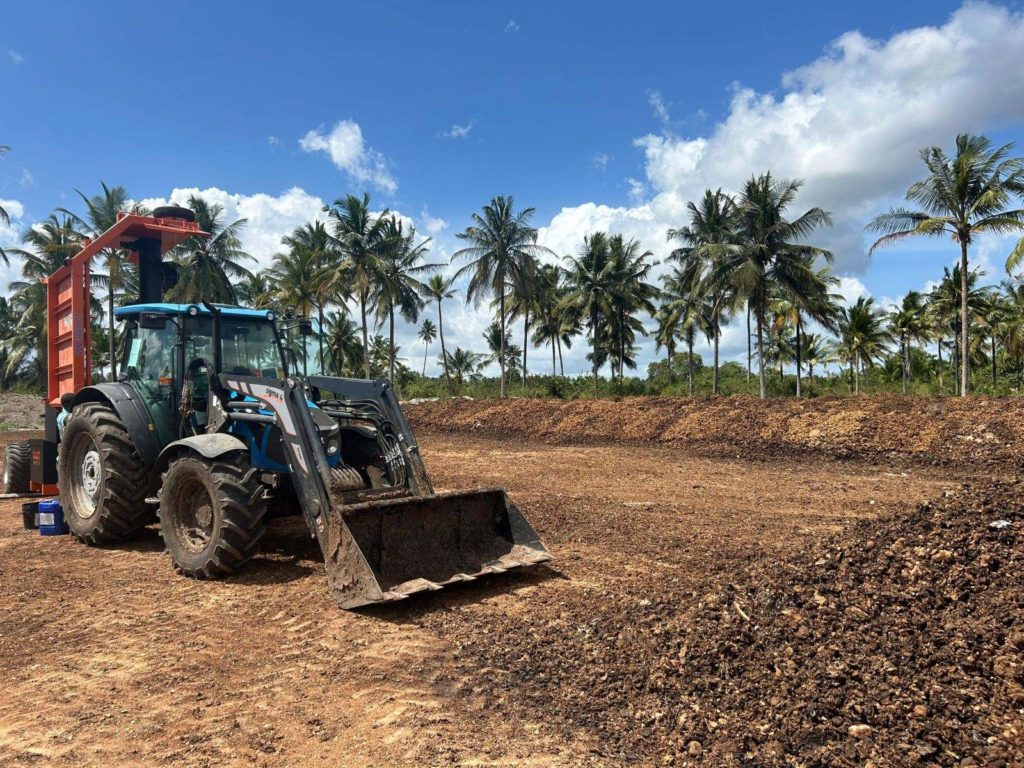
Tanzania, south of Dar es Salaam, August 2024: Kigen and Matt from our partner BioBuu stand at the new composting facility, about 30 Kilometers south of Dar es Salaam. They proudly observe what others would turn away from. Trucks roll up and unload their cargo: Fresh organic waste from a local company. The trucks bring the first fruit and vegetable scraps that would have ended up in landfills just a few weeks ago. Instead, they will now be carefully processed here. The end result is fertile, natural compost that improves soils and protects the climate.
Waste Disposal as a Global Challenge
Tanzania, like many other East African countries, faces a constantly growing waste problem. In the urban center of Dar es Salaam alone, four thousand metric tons of garbage accumulate every day. But instead of sensible use, this waste is often mixed with plastic, metal, and other refuse and disposed of in landfills. There it rots under uncontrolled conditions, releasing large quantities of methane – a greenhouse gas that significantly accelerates climate change. This is where atmosfair and BioBuu come in: collecting organic waste separately to process it specifically.
How Waste Becomes Something Valuable
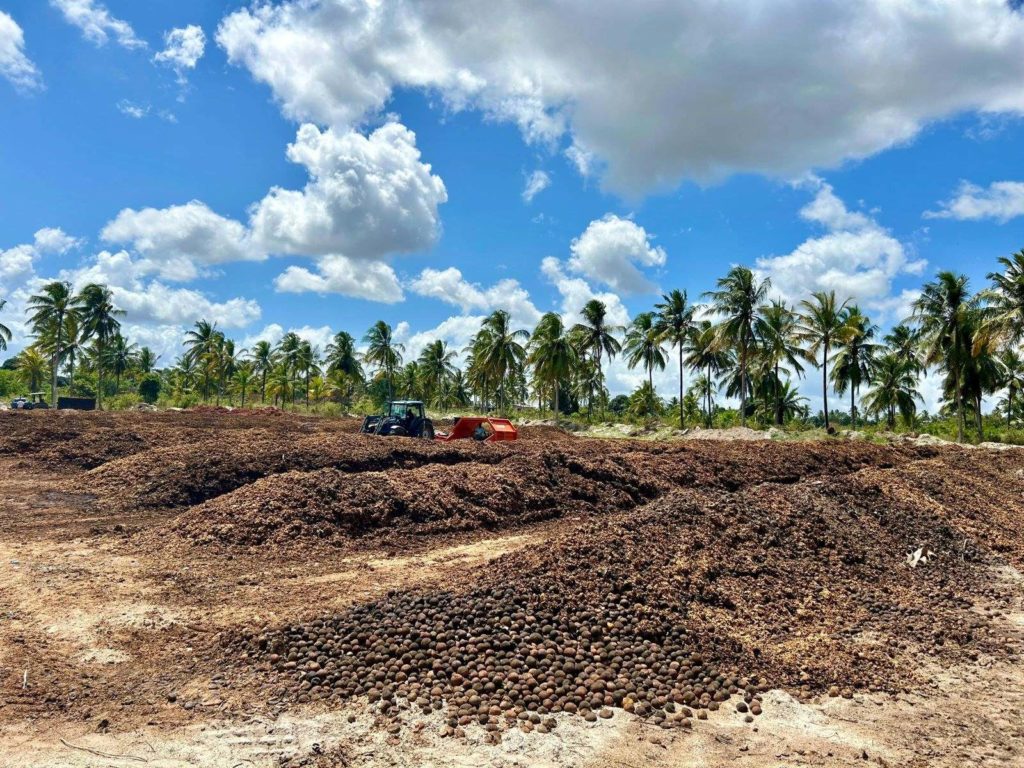
The basis of composting lies in a natural process: the decomposition of organic materials by microorganisms. BioBuu stacks the organic material in a controlled manner in so-called windrows – long, aerated piles that are turned regularly. This turning increases oxygen content, preventing anaerobic decomposition, during which climate-damaging methane forms. At the same time, oxygen increases the activity of microorganisms responsible for decomposition. In the first weeks, the temperature inside the windrows rises significantly due to biological activity. The heat helps kill potentially harmful germs and accelerate the decomposition process. Over 16 weeks, the former waste transforms into nutrient-rich compost that is finally packaged and sold.
Benefits for Local Agricultureft
BioBuu sells the finished compost primarily to smallholder farmers in the region. These farmers often face the challenge of increasing their yields without being able to afford expensive chemical fertilizers. BioBuu’s organic fertilizer offers them a cost-effective and environmentally friendly alternative. The benefits for the soil are enormous: The compost improves soil structure, increases water retention capacity, and provides essential nutrients like nitrogen, phosphorus, and potassium. As a result, plants grow healthier and more resilient, leading to higher yields. For many smallholder farmers, this means not only more income but also greater security in Food supply – particularly important in a region repeatedly confronted with the consequences of drought and climate change.
Social and Economic Benefits
Composting is not just a benefit for agriculture. It also creates new jobs and thereby strengthens the local economy. From collecting waste to processing and marketing the fertilizer, the composting facility offers numerous employment opportunities for local people. Especially for women and young adults, who often have difficulty finding work, new prospects open up here.
The environmental benefits of composting extend far beyond soil improvement. Through controlled decomposition of waste, the formation of methane – one of the most harmful greenhouse gases – is avoided. Methane has a 27 times stronger effect on global warming than carbon dioxide. After expanding our facility, we will process 12 truckloads of organic waste every day. This will allow us to avoid 40 metric tons of CO2 emissions.
Sustainability as a Holistic Concept
The composting project in Tanzania stands as an example of a holistic sustainability concept: It combines ecological, social, and economic benefits and shows how a supposed problem – waste disposal – can become a solution to multiple challenges. atmosfair and BioBuu rely on long-term partnerships with communities and local businesses to operate the composting facilities sustainably. The goal is to extend the model to additional regions and thus make a comprehensive contribution to improving waste management in Tanzania.
Conclusion
The composting facility demonstrates the great potential of sustainable solutions. Here in Tanzania, atmosfair and BioBuu link ecological, social, and economic interests. They are setting a good example – toward a greener future for Tanzania.
 Share
Share