

Climate action that works – while strengthening agriculture and local value creation at the same time: with a new partnership in Johannesburg, we will remove even more CO₂ from the air. Together with the South African company AquaGel, we are modernising a pyrolysis plant that converts residual biomass into biochar. This can be used as a fertiliser on fields, where it permanently binds carbon.
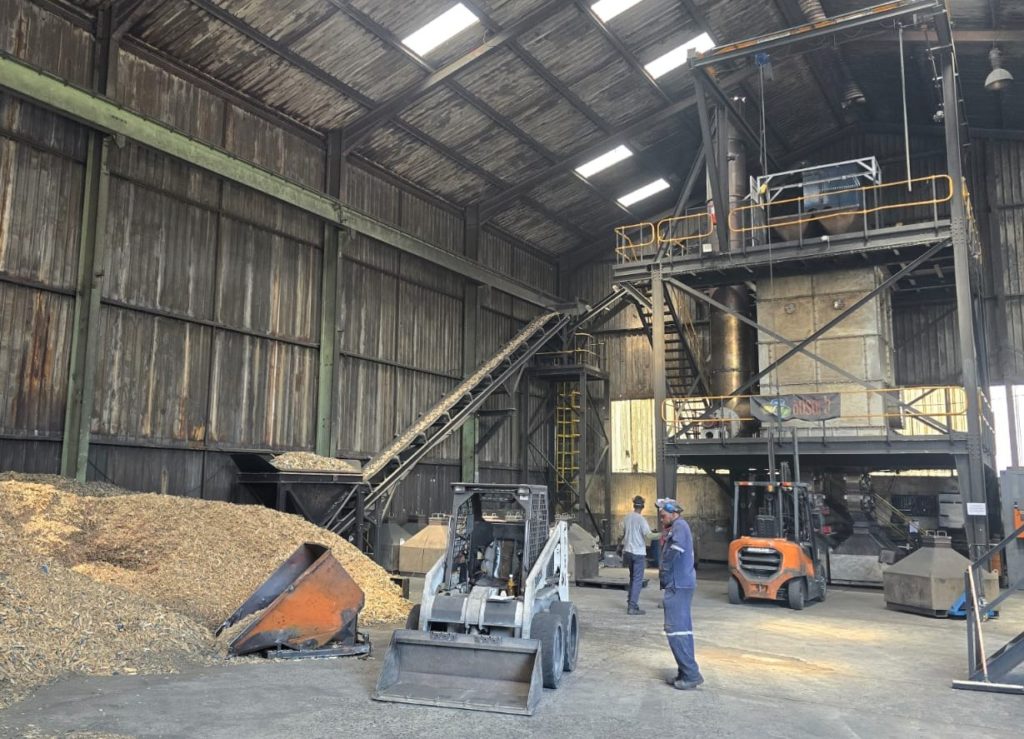
atmosfair project analyst and Article 6 Hub Manager, Gideon van den Berg visited a large factory hall in the East Rand, an industrial zone on the outskirts of Johannesburg. Here, AquaGel operates an existing plant that is planned to be upgraded to increase production capacity. “For us, converting residual waste biomass into durable carbon storage through biochar production is a powerful tool to mitigate climate change. We’ve gained broad experience from biochar projects around the world, but here we also have the exciting opportunity to explore potential synergies between biochar and enhanced rock weathering,” says van den Berg. At full capacity, the plant will produce around 1,200 tonnes of dry biochar per year which AquaGel transforms into 12,000 tonnes of fertiliser. Applied on fields, this fertiliser binds approximately 2,600 tonnes of CO₂ permanently in the soil – an amount that corresponds to five flights of a Boeing 747 from Frankfurt to New York.
To further increase the efficiency and climate impact of the facility, atmosfair is also financing a waste heat recovery system. It will capture the residual heat from the pyrolysis process, which can then be used to generate electricity for the entire project site.
Biochar and rock dust: a powerful combination
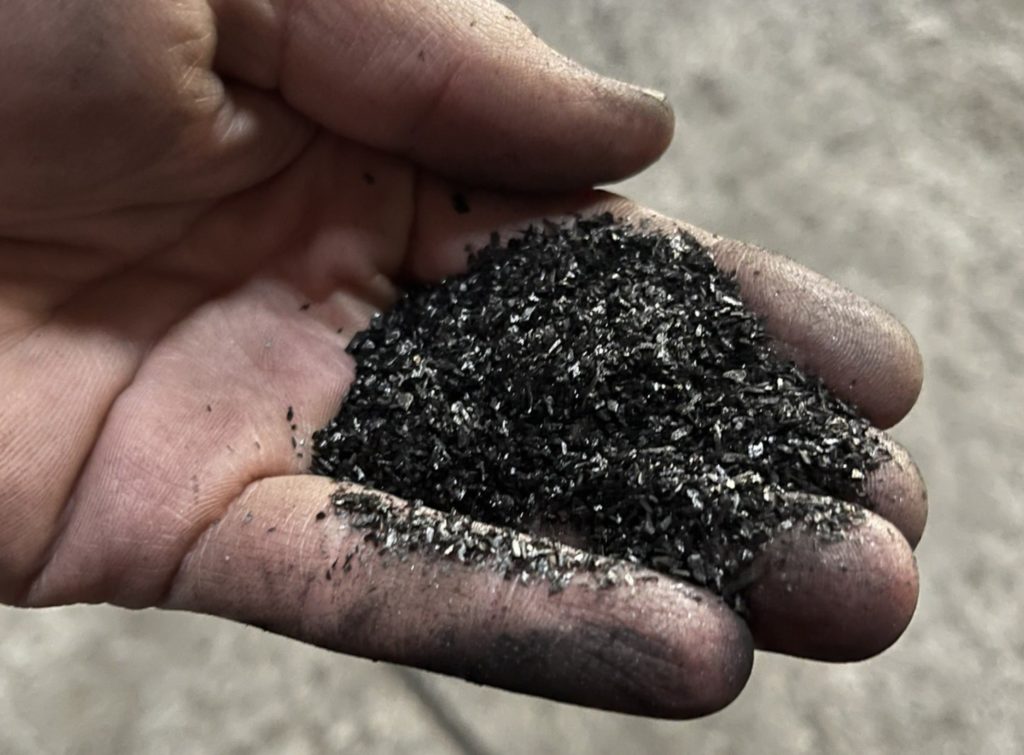
The feedstock for the process consists of damaged parts of wooden palettes that can no longer be reused. This waste biomass has previously been disposed of via landfill or incinerated. Now, we ensure their circular use in the pyrolysis process. In this process, the chipped wood is exposed to high temperatures of several hundred degrees under low oxygen conditions. The heat cracks up molecules, leaving behind biochar which is then combined with locally sourced rock dust.
While biochar contributes to improved soil structure, water retention, and microbial activity, the rock dust component provides additional minerals. Together, these components form a regenerative fertiliser product aimed at strengthening soil resilience and reducing reliance on synthetic inputs, called RegenR8.
Additional climate protection with enhanced rock weathering
Field trials of this new fertiliser have shown promising results, with yield increases of 10 to 20 per cent. The rock dust component may provide further long-term carbon storage benefit through enhanced rock weathering. While the project currently plans to certify carbon removals achieved through biochar application only, we continue to investigate the contribution of the rock dust component to enhanced rock weathering over time.
Clayton Postma, CEO of AquaGel, notes the following about his funding partner: “atmosfair understands that climate action and food security are inseparable. This partnership allows us to scale RegenR8 as both a regenerative agricultural input and a credible carbon removal solution, supporting farmers while delivering measurable climate impact.”
 Share
Share