

Swargadwari, Nepal, December 2025. Preparing food without any emissions: atmosfair is now making this possible for around 2,400 people in the Nepalese Pyuthan district by subsidising induction stoves. As part of a pilot project, atmosfair is promoting the purchase of induction stoves that use electricity from renewable sources, which are abundant in Nepal. atmosfair is working with the local non-governmental organisation People, Energy & Environment Development Association (PEEDA), which is responsible for distributing the stoves, conducting technology demonstrations and raising awareness on the adoption of electric cooking technologies.
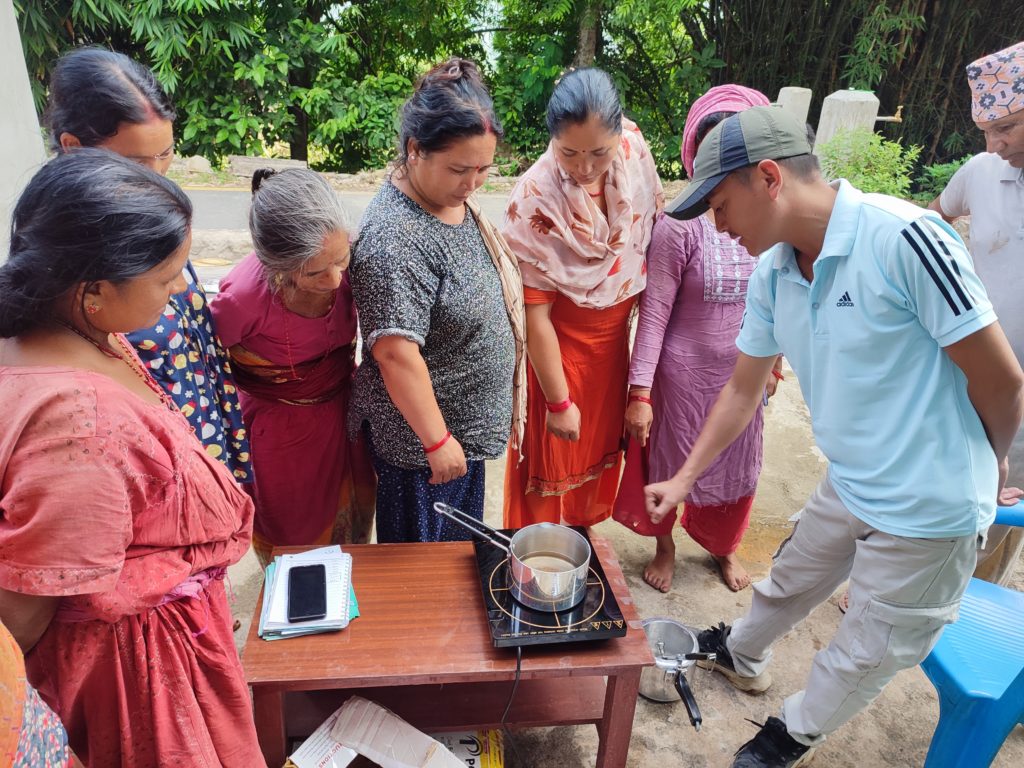
Project manager Sarah Klingenberg explains what the pilot project means for climate protection: ‘People in rural Nepal cause the most greenhouse gas emissions when cooking because they burn wood. That’s exactly where we come in: the induction stoves replace traditional ones, saving each household one and a half tonnes of CO2 per year!’ In total, atmosfair is preventing 720 tonnes of CO2 emissions annually with this pilot project. In addition, people benefit from cleaner air when they do not have to burn wood for cooking.
When selling induction stoves, it is necessary for PEEDA to educate people about the benefits of electric cooking. For many households in the region, cooking without fire is unfamiliar. PEEDA also teaches them how to use the appliances for cooking and how to use electricity as sparingly as possible. The Pyuthan district is very rural and most people here still cook with traditional stoves, which is why this region was chosen. Despite connection to the electricity grid, the electricity infrastructure to support these induction stoves is minimal at the household level, for which PEEDA in coordination with the electricity supplier is upgrading the electrical infrastructure at the household level where required.
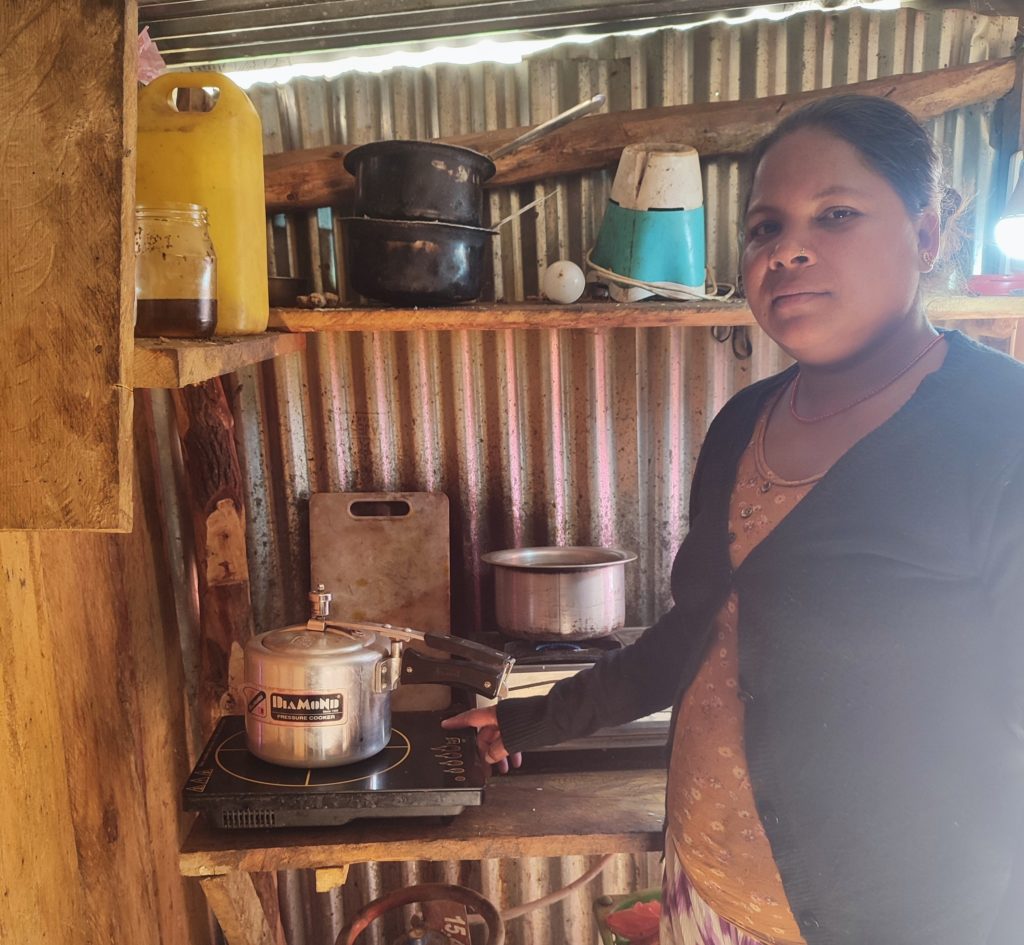
Electric cooking protects forests
The change in cooking appliances benefits not only people and the climate, but also nature, as Biraj Gautam, CEO of PEEDA, explains: “Until now, people in the Pyuthan region collected their own firewood from the forest or bought it from traders who had trees cut down for this purpose. Now that people are cooking with electricity, the forests here are largely spared.” Almost half of the wood in the region is sourced unsustainably, putting forest stocks at risk.
There is no shortage of electricity from renewable energies in Nepal: the country in the Himalayas generates almost all of its electricity from hydropower. Because there is sufficient electrical energy, promoting electric cooking is part of the national climate target (Nationally Determined Contributions, NDC) which is expanding the use of electric cookstoves to 2.1 million households by 2035 under the “Cooking and Heating Quantified Mitigation Targets”. atmosfair and PEEDA are therefore making an important contribution to helping the Nepalese government achieve its climate target. If the pilot project proves successful, there are plans to expand it to 3,000 households.
 Share
Share