

Dear Readers
The COP30 climate conference in Belém, Brazil, recently came to an end – no plan to phase out fossil fuels, but a new fund initiated by Brazil: the Tropical Forests Forever Facility (TFFF) aims to protect tropical forests. What should we make of this?
atmosfair is intensively engaged with the topic of ‘forest protection for climate protection’ (see, for example, the focus in annual report 2020). At that time, we asked whether CO₂ offsetting through forest projects run by private CO₂ offsetting agencies could be a good thing. Unfortunately, this is often not the case: as with other private uses of forests, considerable pressure is being exerted on them. Some want to use forests for timber products, others live in them, and still others would prefer to turn the land into industrial areas. The victims of CO₂ offsetting through forest protection are often indigenous peoples, who are no longer allowed to use their mostly sustainably managed forests. Our conclusion was that the protection of rainforests should not be the responsibility of private companies, but of North-South government partnerships that take indigenous interests into account and are democratically legitimised in the long term. Companies are then welcome to cooperate in this process.
Tropical Forests Forever Facility – finally, forest protection that works?
At first glance, Brazil’s new initiative looks like such a state instrument for forest protection is now becoming a reality. That is good, but we also see major problems with the TFFF. The money that tropical countries are to be rewarded with for preserving their rainforests shall come from the returns on private investments in the financial market, preferably from government and corporate bonds from developing countries. The investments come from a new fund totalling 125 billion US dollars. 100 billion come from companies and 25 billion from a number of countries, including many industrialised nations. Their fund contributions of 25 billion serve as collateral. These public funds are intended to offset losses, for which there is an increased risk when investing in developing countries.
There is a risk that participation in the TFFF will compete with other objectives and programmes and become venture capital. Industrialised countries would ultimately use their taxpayers’ money to secure private venture investments instead of directly promoting climate protection and economic development in developing countries. Another point of criticism is that indigenous groups are not given sufficient consideration, unlike the interests of private companies. They are only to receive 20 per cent of the payments, even though they play a key role in preserving the forests. The TFFF therefore still has a number of question marks hanging over it.
New study with the ifeu Institute: Waste biomass for climate protection in the Global South
When we look for suitable residual biomass that we can use to produce CO₂-neutral electricity or biochar, we sometimes come across sawdust from wood cutting in sawmills and then ask ourselves whether the forest is being managed sensibly. But there is also residual biomass from harvest residues and sewage sludge. We asked ourselves: How much waste biomass actually remains usable when strict environmental and social criteria are applied?
To answer this question, we conducted a study in collaboration with the ifeu Institute, which goes further than previous approaches with its criteria for environmental and social compatibility. We will present the results in a webinar next Wednesday. I can already reveal this much: there is a great deal of residual biomass available!
Miscellaneous topics
Flying and luxury: At COP30, France and Spain, among others, called for a luxury tax on first and business class airline tickets. This measure targets the main polluters, as CO₂ emissions per passenger in these classes are significantly higher than in economy class. This is just one of the findings from the latest edition of the atmosfair Airline Index 2025, which ranks the world’s leading airlines according to their CO₂ efficiency.
From the sky to the basalt cellar: atmosfair’s first direct air capture plant in Kenya, in partnership with Octavia, is up and running and filtering CO₂ from the air, which will be stored in deep basalt rock next year. High-tech in a developing country – so progress is being made after all!
Enjoy the read!
Kind regards,
Dietrich Brockhagen
Managing Director, atmosfair
P.S.: atmosfair is growing and looking for passionate people with technical backgrounds to join our global climate projects. Interested? You can find our current job openings at atmosfair and Solarbelt here.
Events:
Presentation of residual biomass study with panel discussion
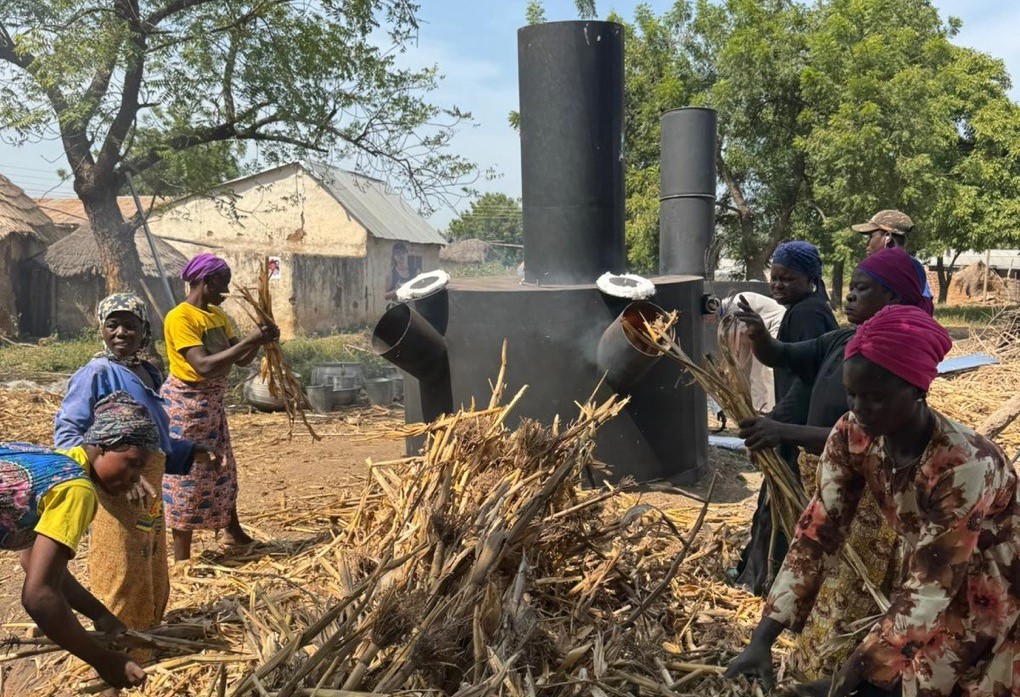
Kerosene from coconut shells? Electricity from straw? Negative emissions with wood waste? Biological waste can be put to good use in climate protection. But how much of it is available? And is its use environmentally and socially compatible? atmosfair has conducted its own study on this topic in collaboration with ifeu, which we will present in a webinar on 10 December.
You can register here for free.
Climate protection in action – atmosfair open day 2025
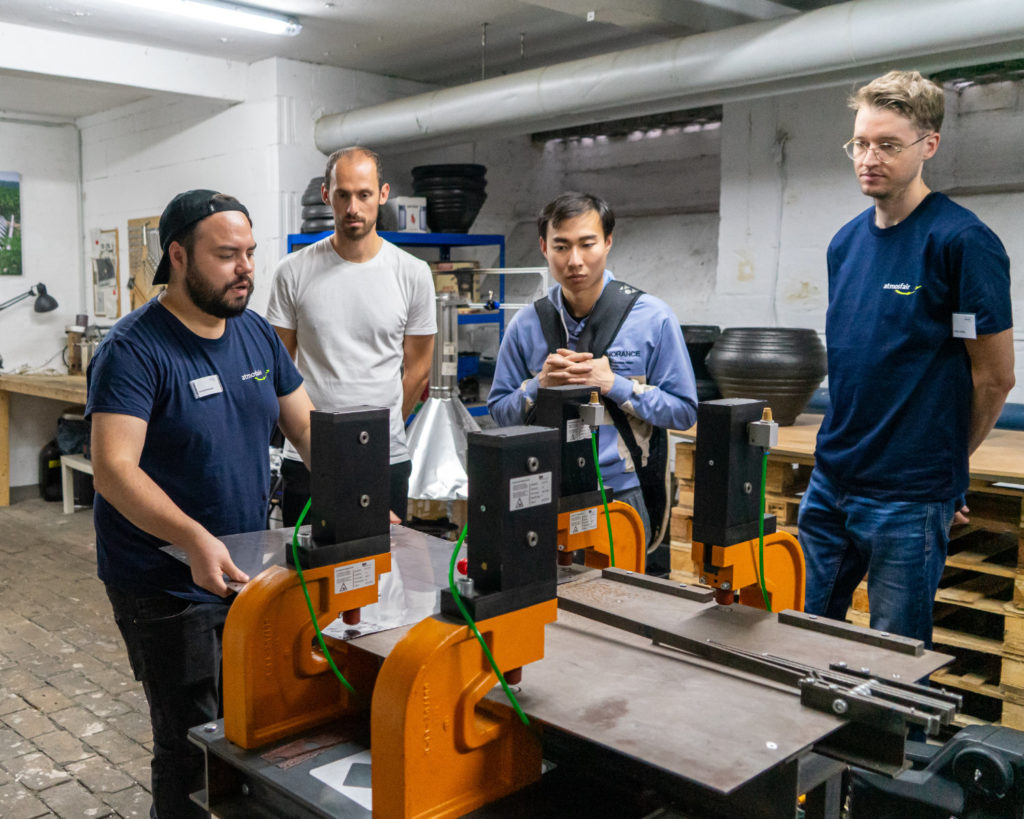
In September, atmosfair welcomed numerous supporters to its Berlin office, where they were able to see our climate protection activities for themselves. Guests enjoyed African food – and a direct view into the stove factory in Rwanda.
Read more
Project News:
First Direct Air Capture unit from atmosfair begins operation
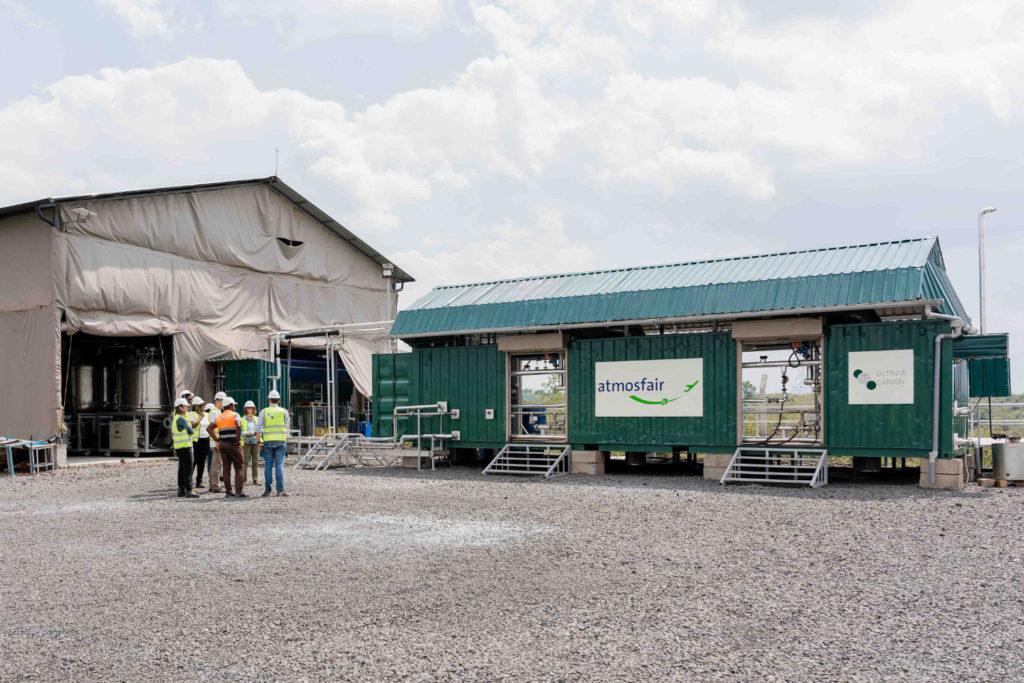
Most climate protection projects prevent greenhouse gas emissions. Now, atmosfair is also removing CO₂ from the atmosphere with its new DAC plant in Kenya. Operating the plant requires energy – but there is huge potential for this underground.
Read more
atmosfair publishes Airline Index 2025
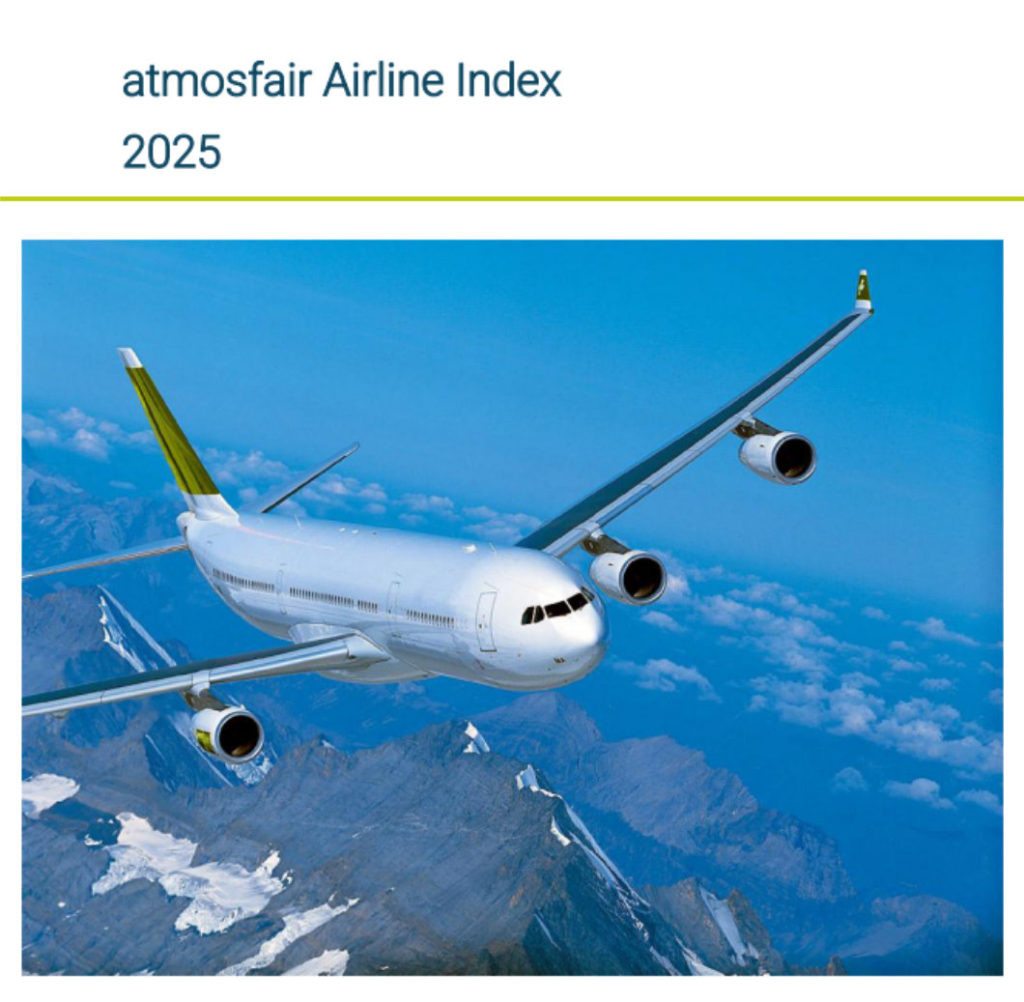
The latest analysis shows that the CO₂ efficiency of aircrafts is not improving sufficiently to meet the Paris climate targets. This is not only due to the age of the aircraft: many airlines that perform poorly share a certain characteristic.
Read more
20 years of atmosfair – a gift for you
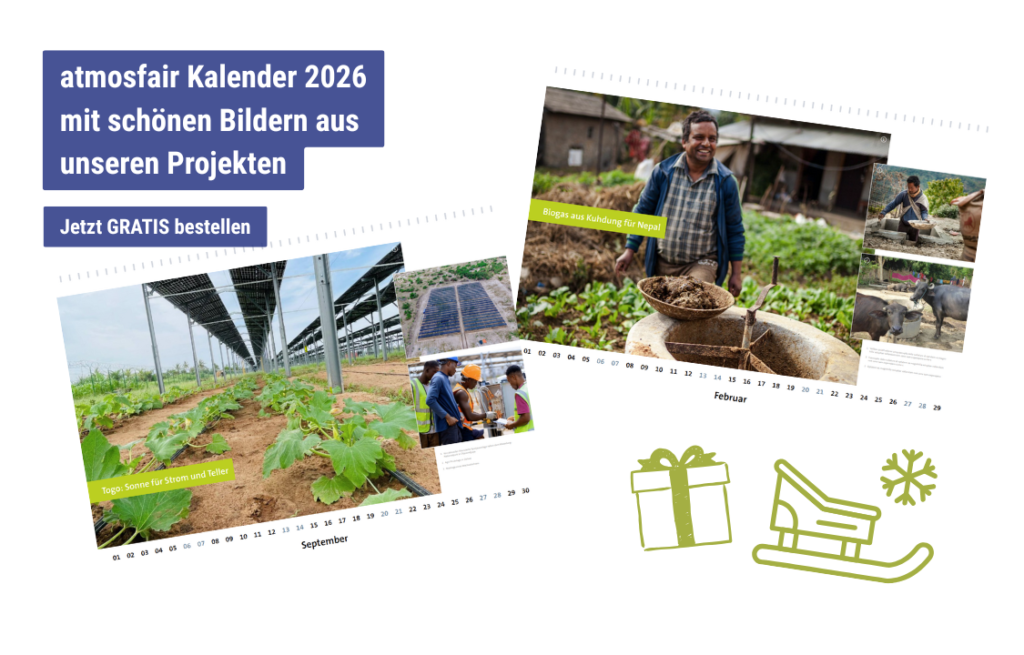
In May, atmosfair celebrated its 20th anniversary. Our work for global climate protection would not be possible without people like you.
As a small token of our appreciation, we are giving away the atmosfair 2026 calendar featuring fascinating images of people and technology. The calendar provides insights into the current work being done to promote climate protection in developing countries and includes interesting facts, explanations and further background information on the reverse side. An eye-catcher in the workplace, in your home office or in the hallway next to the picture of the sunset…
Printed on recycled paper in a practical A3 format. 12 pages from January to December.
Thank you very much for your support and all the best for 2026!
 Share
Share