

Dear Readers
Towards the end of the year, a new study attracted worldwide attention and was also discussed at the climate conference in Belém, Brazil. Internationally renowned climate researchers led by Michael Mann of Pennsylvania University in the USA and Johann Rockström of the Potsdam Institute for Climate Impact Research report that, 10 years after signing the Paris Climate Agreement, 22 of 34 planetary vital signs have reached negative record levels. These include fossil fuel consumption, meat consumption, and CO₂ emissions. Frankfurt-based climate researcher and co-author of the study Nico Wunderling told Tagesschau that some developments in the earth system may now be irreversible. “By exceeding one and a half degrees, we are putting crucial tipping points in the earth system at risk. These include the Amazon rainforest, the Gulf Stream as part of the Atlantic circulation, and the ice sheets in Greenland and Antarctica.”
It has long been known, based on reports by the UN Environment Programme, that the Paris Agreement would protect us from global warming of 3.4 degrees and that we are currently heading towards 2.8 degrees by the end of the century. But who wants to celebrate that as a success? Where do we stand today, 10 years after Paris? And above all, what can we change?
Social tipping points
We do not have to look far for an answer– neither into climate data, nor in the new record figures for solar and wind power plants worldwide, nor in politics – but around our neighbours and within our social environment. The study mentioned above also identifies so-called “social tipping points.” Analogously to tipping points in the physical climate system, these are constellations within societies, institutions, and the economy that, once a critical threshold is crossed, trigger accelerated climate action through cascading effects.
Greta Thunberg brought Fridays for Future all the way to Chancellor Merkel and the UN in New York. Even though she is more controversial today than she was back then, she has left an indelible mark on the Scientists, Mothers, Grandmothers, and Grandfathers for Future who continue to campaign for the climate. Another example is the Hambach Forest, where 50,000 people suddenly demonstrated during a large protest in the forest in autumn 2018. Two years later, the federal government and three state governments decided to preserve the forest. Research shows that sustained, non-violent protests can trigger major transformations, even when they originate from only a small part of the population.
And this is where the danger lies: although solid majorities in almost every country in the world support far-reaching climate measures, most people believe they are in the minority and therefore withdraw.
Research suggests that social considerations may be key to solving this problem. Motivation for climate protection increases when measures are perceived as socially just, when people with different incomes are included, and when potential burdens are distributed fairly. Support for climate protection is greatest in developing countries, where people are already by far more severely affected by the consequences of climate change, even though they have contributed little or nothing to global warming.
Africa: New technologies for more negative emissions
At atmosfair, this year brought progress in the Global South, particularly in Africa, through new technologies and processes. Together with our partner Octavia Carbon, we built the first direct air capture plant in Kenya, which uses filters to extract CO₂ directly from the air and then stores it permanently on site in deep basalt rock. We also expanded our biochar production to Ecuador, Namibia, and Ghana. I visited Ghana in September and saw how small farmers are turning cocoa pod waste into biochar. Thanks to our small-scale pyrolysis plants, they can now use waste from their farms to improve their soil. One farmer proudly showed me how biochar in the soil makes her amaranth grow faster than fertilising with pure animal manure. But there is also news from our work in Ecuador and Nepal.
Only 3.5%
The threshold for positive social tipping points in societies is surprisingly low – just 3.5% of the population. And that is good news: we are not alone, and even a small number of us can make a big difference.
With this in mind, I would like to thank you for your commitment. Together with the staff from atmosfair, I wish you a happy new year!
Kind regards,
Dietrich Brockhagen
Managing Director, atmosfair
P.S.: atmosfair is growing and looking for passionate people with technical backgrounds to join our global climate projects. Interested? You can find our current job openings at atmosfair and Solarbelt here.
Project news:
480 Nepalese households now cook with electricity
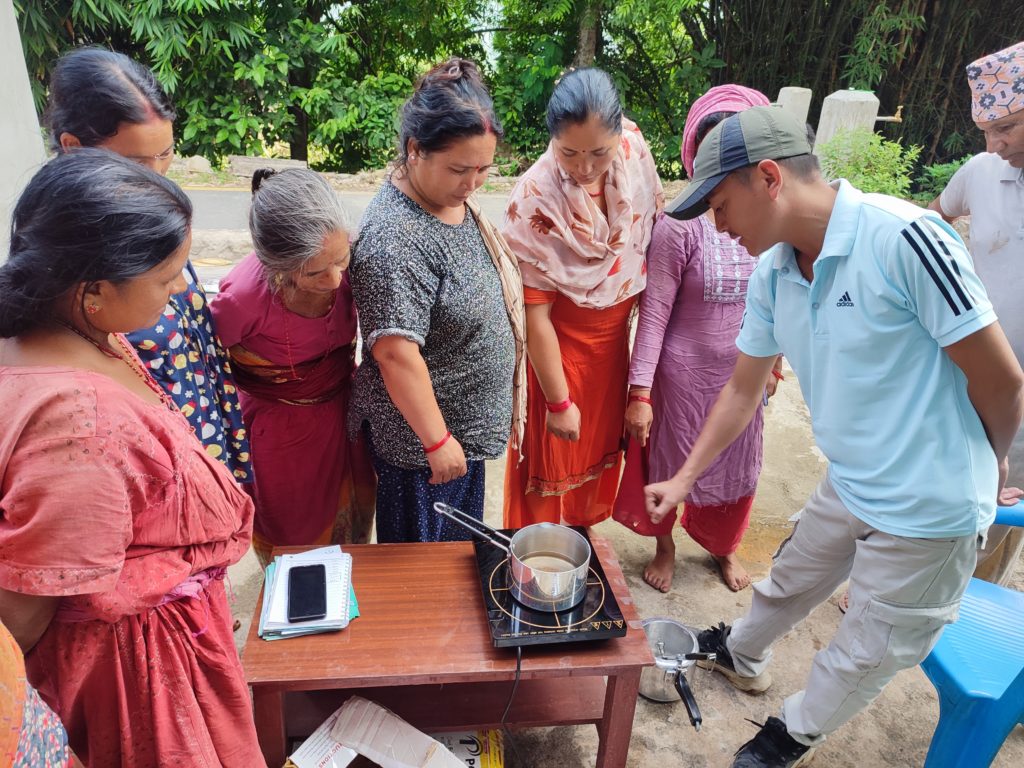
Instead of lighting a smoky fire, in an initial pilot project, people in the Pyuthan district are now connecting induction stoves and cook without any emissions. There is plenty of green electricity available for this, as Nepal is blessed with renewable energy in many places.
Read more
atmosfair launches biochar production in Ecuador
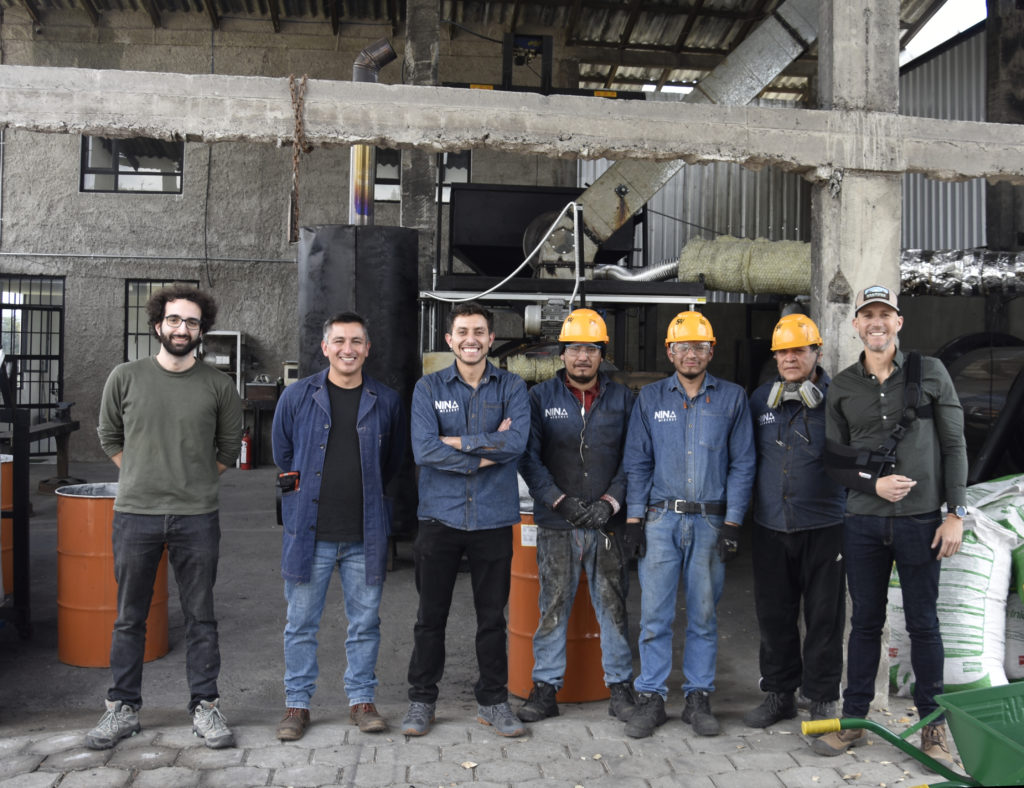
Biochar is a multi-talented material: it permanently binds carbon in the soil and improves its fertility. To produce it, we need waste materials such as wood residues from the Aglomerados Cotopaxi forest.
Read more
 Share
Share